
Ludom Stopped Asking Permission
On her new self-titled album, the Brazilian artist returns to herself. We talked transformation, diaspora, and the power of staying soft.
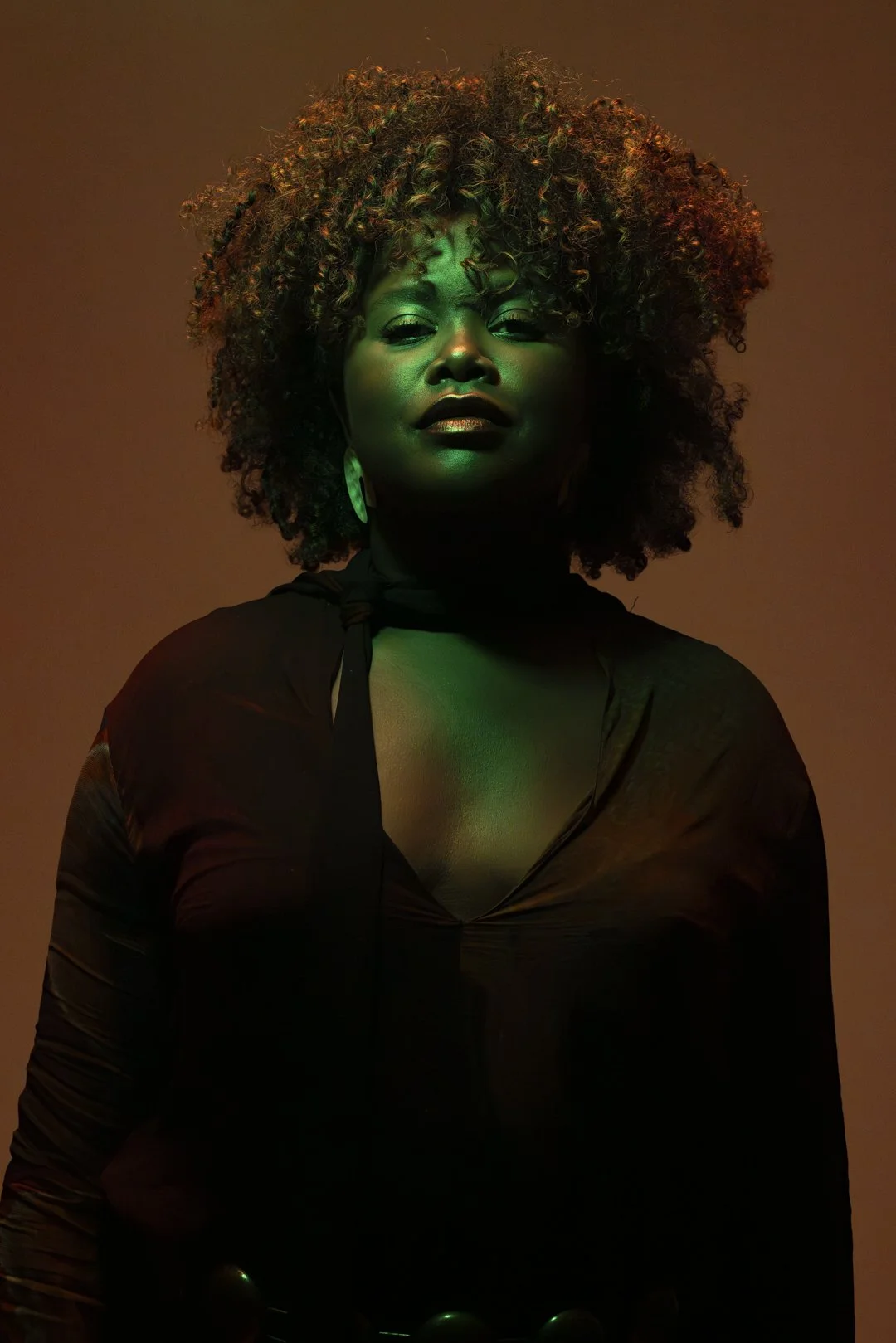
Photography by Marcos Hermes
Seven years sit between Ludom’s debut and her sophomore record. In that time, she toured four continents, slept on friends’ couches between countries, sent production notes from bus stations, and shed a name. What was once Luciane Dom compressed into something truer: Ludom.
Her self-titled album arrived this November via Toca Discos with Universal Music distribution. Eleven tracks flow through MPB, Afrobeat, R&B, hip-hop, and gospel, featuring Bia Ferreira and DJ Negralha, shaped by producers Felipe Rodarte, Davidson Ilarindo, Rodrigo Ferrera, and Theo Zagrae.
Our coup de cœur? Calôbaixô.
On the surface: sensual R&B. Underneath: something rawer, a desperate want for calm, for escape, for a remedy that soothes insomnia and maybe a little more. The track sits early in the album and sets a tone we keep returning to.
We caught up with Ludom to talk transformation, diaspora, and what it costs to create from the soft places.
On becoming Ludom
“The change came from a deep process of returning to myself,” she says. Her first album, Liberte Esse Banzo, held the gaze of a historian, observing society from a careful distance. “I was writing without fully belonging to what I was writing about, even though I was fully part of it.”
This time, something shifted. “My voice moved into the first person. I allowed my emotional gaps and my emotional completions to become visible. I became more porous, more vulnerable and that brought a new kind of beauty.”
The name change marked an arrival. “Ludom is the synthesis of this new place. I feel more whole, more certain of my path, and fully committed to my truth.”
The Softness She Refuses to Hide
Creating from that exposed place, as a Black Brazilian woman navigating international stages, demands something. "It requires energy, protection, emotional and literal translation," she says. "It means confronting stereotypes and expectations, and facing the fear that intimacy might be misunderstood or turned into something to be consumed."
She composes with vulnerability as her starting point. "I chose to show myself without negotiating my humanity. I chose to resist historical erasure. The Ludom in me chose to exist in my full complexity, even when the world asked me to simplify. In that sense, vulnerability becomes a strategy of survival. And a strategy that does not need interpreters."
Where the Diasporas Converge
The album was built in transit. Keyboards recorded in Canada, lyrics written in Puerto Rico, production ideas exchanged through voice notes from airports. When asked where on the record she hears all those geographies converging, Ludom points to "Can't Hide."
"I can hear Brazil in conversation with the United States, whispering to Puerto Rico. That is where my diaspora lives." The song became a fan favourite during her 2024/2025 U.S. tour, audiences responding to something they perhaps couldn't name but recognized anyway.
"The diasporas meet inside me first," she says, "and then they meet inside the music."
A Record Made to Keep Moving
"I hope they feel deeply. I hope they question themselves. I hope they embrace their contradictions."
For those discovering her work for the first time, she offers the album as invitation. "Not to understand me, but to find something of themselves in these songs. The beautiful kind of madness that lives in Ludom has many layers, and I believe those layers can reach people in very different places. This project was made in motion, and I want it to keep moving, through people."
Ludom is out now on all platforms via Toca Discos / Universal Music.
Photography by Marcos Hermes.